


Hernandez
Growing binational trade, nearshoring momentum, and a booming Gulf Coast economy are creating demand for new cross-border infrastructure.
There’s a principle that infrastructure planners have internalized through experience rather than theory: connectivity doesn’t create demand, it follows it. Industries arrive first. Trade volumes grow. Data flows multiply. And at some point, the underlying network infrastructure has to match the market that’s already there, or that market runs into a ceiling no amount of engineering ingenuity can overcome.
That’s the situation Brownsville, Texas finds itself in today.
Sitting at the southernmost tip of the Rio Grande Valley, Brownsville has spent most of the past decade in the background of the U.S.-Mexico connectivity conversation. McAllen dominated the narrative as the region’s primary interconnection hub. Laredo anchored the logistics corridor. Brownsville, for all its geographic logic as a border crossing point, lacked the dedicated carrier-neutral fiber infrastructure that serious network operators require.
That’s changing. And the reason it’s changing has less to do with any single development, and everything to do with the convergence of forces that have been building in Brownsville for years.
MDC Data Centers is now constructing a new International Fiber Crossing in Brownsville, a licensed, carrier-neutral fiber crossing connecting the U.S. to Mexico at the southernmost point of Texas. What’s being built is not a speculative bet on a market that might emerge. It’s an infrastructure investment in a market that has already arrived.
A Market That Has Earned Its Infrastructure
Markets that earn serious infrastructure investment share a common profile: multiple independent growth drivers, real trade volume, and a critical mass of operators who need reliable connectivity rather than a best-effort alternative. Brownsville now checks all three.
The regional economy has undergone a structural shift. Energy, aerospace, advanced manufacturing, defense technology, and maritime industry are not sectors that visit Brownsville, they are increasingly headquartered, anchored, and expanding there. The Port of Brownsville alone is tracking more than $60 billion in active and announced projects, a concentration of industrial investment that reflects a long-term commitment to the region, not a transient boom.
LNG infrastructure, floating data center projects, aerospace manufacturing, and AI-powered maritime technology are all in various stages of development along the same stretch of South Texas coastline.
Across the Rio Grande, Matamoros is undergoing a parallel transformation. For decades, the Brownsville-Matamoros corridor developed in parallel tracks — Matamoros driven by maquiladora manufacturing, Brownsville by logistics and energy — with the two economies more adjacent than integrated. Nearshoring pressure and new cross-border coordination are changing that. The Matamoros manufacturing base is expanding supply chains, attracting new investment, and building the kind of deliberate binational alignment that has defined McAllen-Reynosa for years. The Brownsville-Matamoros metropolitan area, already home to more than one million people, is becoming a unified economic zone in ways it hasn’t been before.
Brownsville’s own digital infrastructure has also undergone a quiet but significant transformation. The city spent years on national lists of the least-connected places in the United States, a distinction that had real economic consequences. Local leadership responded with a $90 million public-private fiber buildout that now reaches all 50,000 locations across 145 square miles. Private 5G smart city infrastructure is being deployed citywide. The Texas Middle Mile Program has committed nearly $22 million for a further 138-mile backbone expansion. In a few years, Brownsville went from a cautionary tale about digital exclusion to a reference case for community-driven connectivity investment.
What this creates, in aggregate, is a market that has done the work. The industrial base is there. The binational trade is deepening. The local digital infrastructure is catching up. What has been missing — until now — is the cross-border fiber infrastructure that connects that market to the rest of the network.
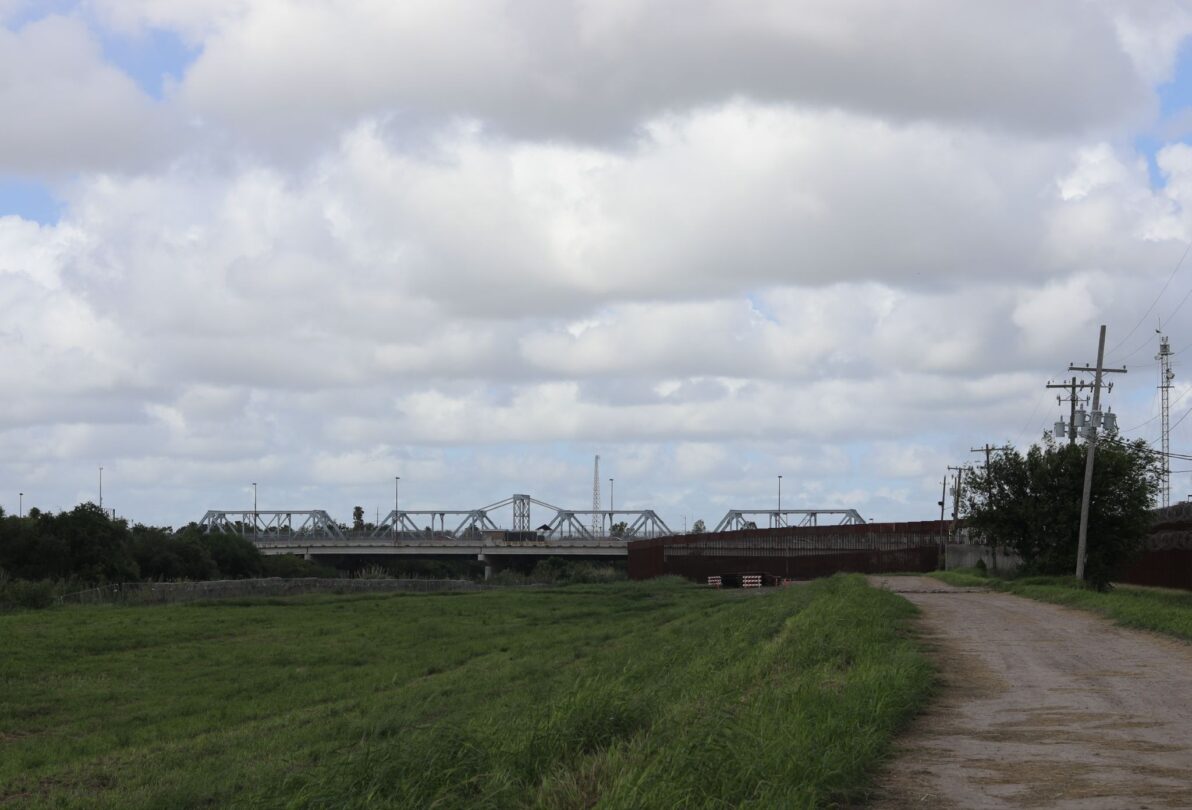
📸 View of the Brownsville & Matamoros International Bridge
Why a New Crossing Matters — Not Just a New Route
Adding fiber capacity to an existing crossing is an incremental improvement. Adding a geographically distinct crossing is a structural one. The difference matters more than it might appear.
Every network engineer who has worked across the U.S.-Mexico border understands the fundamental constraint: the crossing points are not interchangeable. Where fiber physically crosses the border determines which Mexican networks you reach directly, what latency profiles are achievable, and how much genuine geographic redundancy you can build into your architecture. You can add capacity on an existing route and still have a single point of failure. What you cannot replicate with capacity alone is a physically separate path through a separate port of entry.
For Gulf Coast cross-border traffic, the existing topology has long centered on two primary locations. McAllen provides direct access to northeastern Mexico and the Monterrey industrial corridor, the densest concentration of manufacturing, logistics, and carrier infrastructure in northern Mexico. Laredo, the busiest commercial land port in the United States by trade volume, is a natural aggregation point for fiber given the concentration of freight and supply chain activity that crosses there daily. Together, they carry an enormous share of the cross-border network traffic between Texas and Mexico.
But both crossings serve the upper and mid-Valley corridor. For operators whose traffic originates or terminates closer to the Gulf Coast — in Brownsville, in Matamoros, or deeper into southeastern Mexico — routing through McAllen or Laredo means adding distance and latency that serves geography rather than the network. It’s the kind of architectural compromise that network engineers tolerate when there is no alternative, and eliminate as soon as one becomes available.
A Brownsville IFC changes that calculation by introducing a third, geographically separate route. Traffic that belongs at the southern end of the Texas-Mexico border no longer needs to route north to find a crossing. Carriers designing multi-homed cross-border topologies gain a southern anchor that doesn’t share physical infrastructure — or physical risk — with their northern routes. Cloud providers and hyperscalers building distributed edge presence in Mexico gain an additional entry point into the Matamoros carrier ecosystem. Enterprises in the energy, logistics, and advanced manufacturing sectors operating across the Brownsville-Matamoros corridor gain connectivity that matches their actual geography.
The diversity argument isn’t theoretical. Cross-border fiber infrastructure faces a distinct category of operational risk: regulatory environments on two sides of an international border, physical infrastructure concentrated at a limited number of licensed crossing points, and commercial dependency on whoever controls the underlying path. A carrier-neutral crossing at a geographically distinct location addresses all three by separating infrastructure control, physical routing, and commercial relationships from those of an operator’s existing cross-border paths.
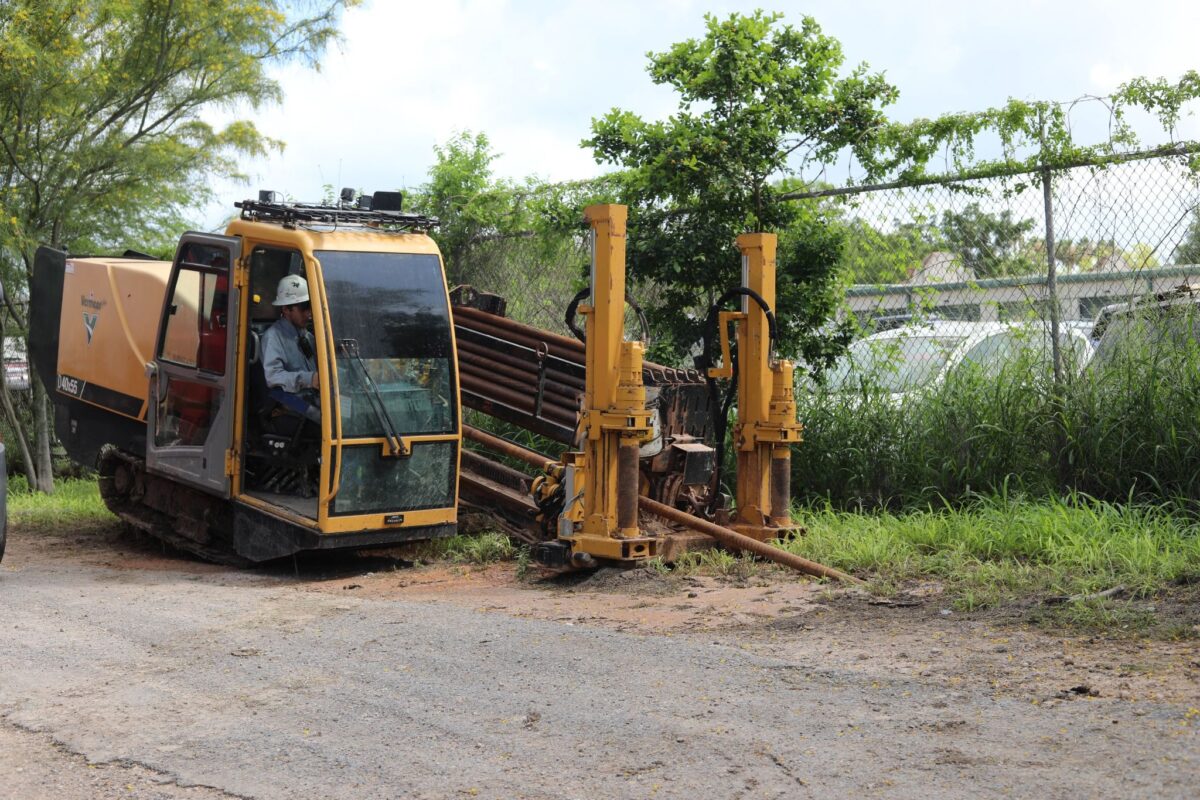
📸 Underground drilling for the new crossing
Route diversity vs. redundancy: Redundant fiber on the same path protects against a cable cut. A geographically diverse crossing — a separate route through a separate port of entry — protects against the broader set of risks that make cross-border network architecture genuinely complex.
How MDC Approaches Cross-Border Infrastructure
The Brownsville IFC is not MDC’s first crossing. It is the latest in a systematic buildout that now spans the full length of the U.S.-Mexico border.
MDC Data Centers operates the largest concentration of International Fiber Crossings under a single carrier-neutral operator along the border — with locations at McAllen, Laredo, Eagle Pass, El Paso, Nogales, and San Diego, and the Brownsville crossing now under construction. Each location follows the same model: self-owned, licensed infrastructure; carrier-neutral access at the physical layer; and direct connection into MDC’s BorderConnect Platform™ — an ecosystem of more than 60 Mexican carriers and networks accessible at each PoP.
The carrier-neutral model is worth understanding in this context. MDC operates under an Actively Neutral™ philosophy, which means the company does not sell competing lit services or managed wavelength products. MDC provides the infrastructure layer — conduit, dark fiber strands, splice vaults, handoff points on both sides of the border, regulatory standing with U.S. and Mexican authorities — while the operator retains full control over the equipment, routing, and services they build on top of it. This is infrastructure-layer access: what happens above it is the customer’s decision.
The practical consequence of that model is that operators who build on MDC’s crossings are not acquiring a service that can be re-priced, deprecated, or restructured by a provider whose interests may not align with theirs. They are acquiring access to physical infrastructure, with an operator whose business model depends on their success.
The Brownsville crossing extends that model to the southernmost point of Texas. When it comes online, it will connect Brownsville to Matamoros through MDC’s own infrastructure, with carrier-neutral interconnection and the full BorderConnect Platform™ ecosystem available at the crossing point.
Construction is underway. The conduit is going in. Progress is visible — and the teams building this crossing are the same teams that have put MDC’s infrastructure in the ground across the border corridor for over a decade.
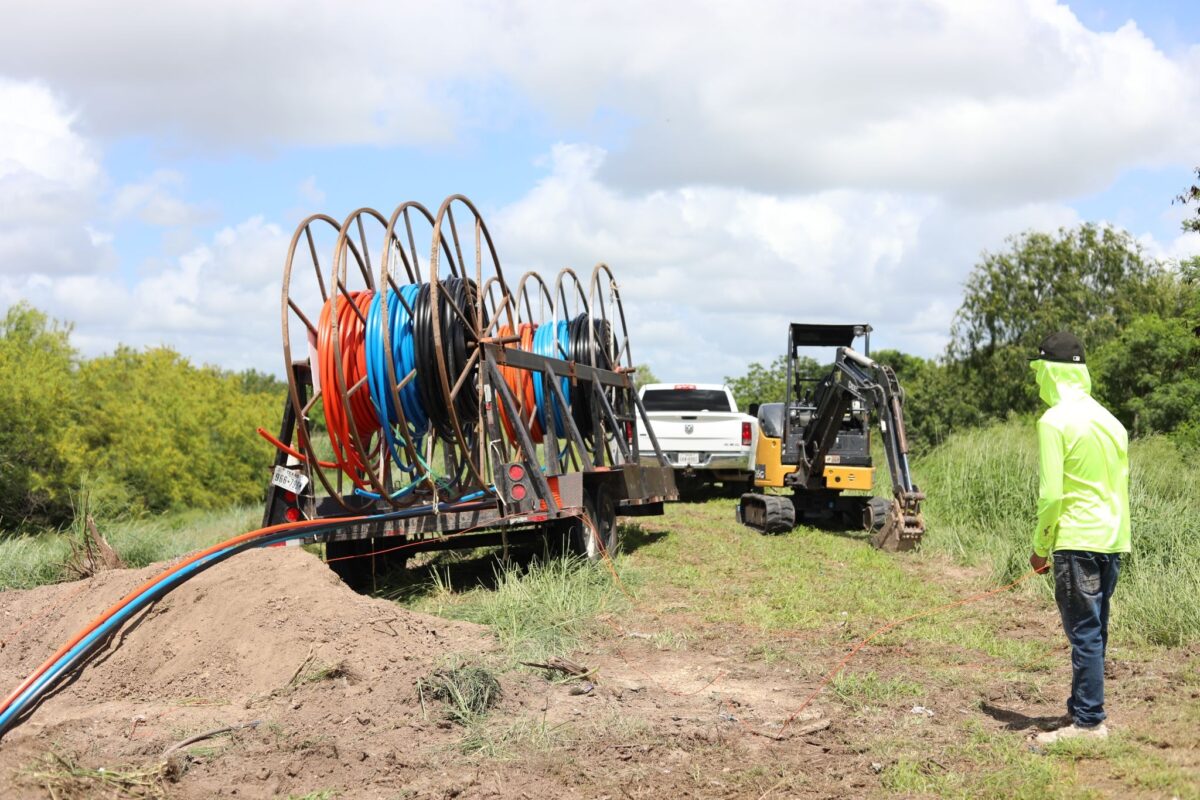
📸 Duct installation for the fiber route
Explore MDC’s Cross-Border Infrastructure
The Brownsville crossing is the focus of this article, but it sits within a larger network picture that’s worth understanding.
MDC’s BorderConnect Platform™ is not a collection of independent crossing points — it’s a coordinated system of carrier-neutral interconnection hubs at strategic locations along the full border, designed so that operators can build genuinely diverse, geographically distributed cross-border architectures. McAllen for the Monterrey corridor. Laredo for the logistics concentration. Eagle Pass for path diversity. El Paso and Ciudad Juárez for western Texas. Nogales for Arizona and Pacific-coast routes. San Diego for California and Baja California. And now Brownsville for the Gulf Coast.
If you want to go deeper on the fundamentals of International Fiber Crossings — how they work, what to look for in a provider, how to evaluate carrier neutrality and ecosystem density, and how the market has evolved to include flexible Crossing-as-a-Service models — we’ve put together a comprehensive resource specifically for network engineers and infrastructure decision-makers:
What Is an International Fiber Crossing and Why It’s Critical for US-Mexico Network Operations
The Gulf Coast’s Next Connectivity Hub Is Taking Shape
When MDC’s Brownsville IFC comes online, it will add something to the U.S.-Mexico border that hasn’t existed before: a carrier-neutral, ecosystem-connected International Fiber Crossing at the southernmost point of Texas, purpose-built infrastructure for a market that has earned it.
The industries operating in the Brownsville-Matamoros corridor are not temporary. The trade volumes crossing this border will grow. The networks that serve those industries will need cross-border infrastructure that is resilient, neutral, and physically distinct from what they’re already running. The Brownsville IFC is being built to meet that need, not when it arrives, but ahead of it.
That’s the principle MDC has applied across every crossing in its portfolio. Infrastructure should be ready when the market needs it, not running to catch up.
Brownsville’s moment is here. The infrastructure is coming.
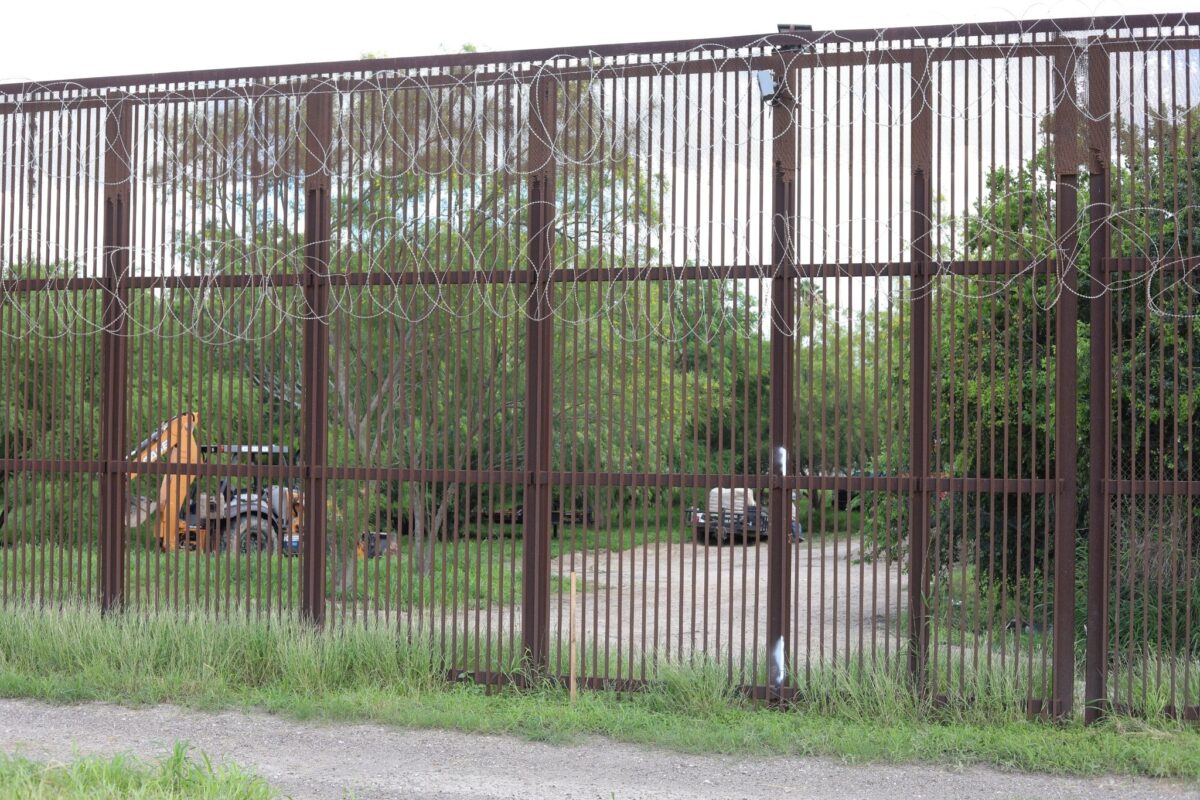
📸 Construction along the border line
Ready to learn more about MDC’s Brownsville crossing or explore how our cross-border infrastructure can support your network?